Saturday, 10 March 2018

It Worked Again

It so often happens, especially on busy trains. And this train, the Friday 1249 from Leeds to Carlisle that goes along the purportedly picturesque and spectacular Settle and Carlisle line, was certainly busy, people were standing for part of the journey especially from Shipley. It’s only a little train, two carriages long, but I think the authorities haven’t yet woken up to the fact that trains in the north of England increasingly struggle with capacity. But by getting on briskly I found a seat by the window, a young woman came and sat by me, and I started catching up on my diary, I decided to write in my book diary rather than my electronic diary as the train was so packed with people and bags that I’d have had trouble getting the iPad out of my bag.
‘May I ask what you are writing?’, asked the young woman. So I told her, and that started a conversation that lasted until I got off the train at Garsdale some hour and a half later. The young woman was, she told me, an apprentice digital journalist with the BBC, currently assigned to BBC Radio Cumbria in Carlisle, she’d been in Leeds all week on a work assignment. A digital journalist essentially makes videos, that then form part of news stories on the BBC’s web pages, and Facebook and Twitter pages. She was, I guess, about 22-years-old.
So we had this bizarre situation of a 72-year-old geezer with a cut on his forehead (no idea how that happened) and a 22-year-young woman with false eyelashes, a sweaty nose, and a dream of becoming a presenter on Blue Peter (for I asked her about her dreams, though not about her nose or eyelashes) showing each other pictures and videos on their technologies, for by this time I had scrabbled about and fished my iPad out of my bag. And discussing photo-processing and video-processing techniques, among other things. I wondered what the people in the seats in front of us, who must have been able to hear what we were saying, thought about this. Not much, I think, by what I could see of their body language.
We exchanged blog addresses, but the address she gave me doesn’t work. I should have tried it while we were talking. So I don’t know what her name is. Not that it matters, the hour and a half was most interesting and stimulating, for me at any rate, and as a result I have resolved to do more work with videos. Vids are the future, my travelling companion tells me, for almost everything that you see, moves.

Sunday, 12 November 2017

Brexit? Seen It All Before

In my working life I have been involved in implementing system changes in organisations, while at the same time observing those that went wrong in other organisations, and pondering why they failed.
I would say that for a major system change to be a success, three fundamentals are essential:.
1. A clear vision of what you are trying to achieve. And the achievements need to be precise. Saying we are going to have a new system that will put us way ahead of the field is too vague. ‘We are leaving the EU for a great new future’ is equally far too vague as a vision, it doesn’t say what you are trying to achieve. ‘We are going to regain our sovereignty’, much too vague, for how will you know when you have achieved it? ‘The very best for Britain’, how on earth are you going to know when you’ve achieved that? You cannot leave something without going on to something else, and there is no shared vision of what that something should be. Individuals have their views, of course, they always do, but the vision needs to be from the top, and sold from the top.
2. Implement incrementally. A big-bang change on a complex system never works very well, simply because the complexities are too enormous for a person, or a group of people, to get their head round.
3. If a prototype appears to be not working, be prepared to change it. We need a system that works, not one that we’re going to stand on our high horse over.
What happens when those fundamentals are ignored follows a common pattern, essentially a great deal of time and money gets spent to end up with something not that different from what you started with in the first place.
Tony Blair’s major computerisation project for the NHS was a typical case in point, we should not blame him, for he is not a technology expert, we can blame the dinosaurs in suits that he engaged to manage the project; at a time when the world was moving towards distributed processing, the Cloud, and machine learning, his supposed experts were trying to make everything work on a 1980’s mainframe. Many of us knew that was never going to have a future.
Any many people know that Brexit isn’t going to work, too, because similarly it is under the control and guidance of the dinosaurs in suits.
As well as the technological inevitability of failure, there is the human inevitability of managing that failure. It is absolutely typical and normal that as the woolly-brained system change gets underway, those who are in favour of it pronounce that all gainsayers are gratuitous wreckers, with no optimism and delight in the great future ahead. That always happens. And then as things do not seem to be progressing entirely smoothly, the management does exactly what Theresa May did in November 2017: they set a date at which this thing is Going To Happen. Oh that is soooo typical!
For people like me, who voted Remain – Brexit could affect me negatively personally, in fact it already is, so I would vote Remain wouldn’t I? – this is all actually not too bad. Money will be spent, there will be arguments, there will be battles, and at the end of it all, if the pattern is as it is, we shall end up with not much change. Since the new system won’t really work, and because it may be difficult to abandon it completely, repercussions will continue long after the ‘implementation date’; repercussions and great cost, until either the thing fades away or someone puts their finger in the hole in the money dyke and says ‘Stop’.
If I were a passionate Leave proponent, I would be much more worried, I would be concerned that Vote Leave was rapidly becoming Vote Lose. I would be saying let’s stop this madness now, and devise a plan that is actually going to work. But I suspect no one would listen. That’s typical too.
Of course I may be wrong, but if I am wrong, then this major system change that is Brexit will be a first, bucking all past trends and throwing all theories of how to implement change in an organisation out of the window. I don’t think so!
I’ve seen it all before.

Wednesday, 21 December 2016

Eurostar Missing a Trick

It’s the second time this year that, for family health reasons, I’ve had to do a late cancel on booked Eurostar tickets.
You lose your money, there’s no refund mechanism on advance tickets, annoying, but such is life.
But even more annoying is the text messages and emails you get, asking for feedback on the trip that you haven’t taken. Since the ticket hasn’t been through the scanner at check-in, it shouldn’t be too hard for the system to detect that you haven’t used it.
No mechanism for cancelling online seems to be especially missing a trick, for even with no refund, notification of cancellation would mean they can resell the seat. Seems like Eurostar would benefit greatly from a bit of expensive IT and marketing consultancy.

Sunday, 14 August 2016

Dabbling in Trains

I have been distracted, gripped I should say, by a little bit of programming, the outcome of which is to be seen at Oxenholme Punctuality Check.
Getting those charts right took a bit of learning on how to do such things on a web page, I used chart.js version 2.1.6, in which I could not get stacked bar charts to work at all satisfactorily, so decided against them in the end. Not sure about chart.js, very good in some ways but a bit lacking in some of the basics I thought. The legend down the right column of the page explains the why and what fors in doing the page at all.
Having done that, what next with it? I honestly don’t know. There are several options I can think of:
1. Tell Virgin Trains about it and ask whether they have plans in place for improvement? but perhaps they have this info to hand already and so will just say, oh no, not annuver bloody train spotter with grandiose ideas about himself.
2. Do a write-up for a rail mag on how this is done. It’d be easy to adapt it for other stations, I’d want to avoid providing an online service as that could cost me a bit in database capacity. So might be a bit technical for a rail mag possibly.
3. Probably don’t want to cause trouble by letting the local paper get wind of it.
4. Do nothing at all with it and get on with other things. That’s feeling like favourite at the moment. But then again if no one tells the rail company about it, can I complain?
5. Or there may be a local rail service monitoring group – an Obergruppenführer of the Eisenbahn Geschwader – that might be interested. (I like that title, rolls off the tongue, if there isn’t one perhaps I could volunteer).
I asked for advice, from those in the business. Essentially the advice is that there’s no point in doing anything with this, as those in the business know all about it already. Railway magazines regularly comment on it, apparently, for they get statistics too, though whether compiled so easily and slickly as mine I don’t know. The problem that is identified and regularly complained about is that measurement of train punctuality is on the destination station only, the railway companies have no performance criteria to uphold on the intermediate stations, so they don’t bother too much. There’s leeway in the timetables so that the destination station can be reached, most of the time, on time.
This seems to be different from Germany, Holland, Denmark and France, where trains do arrive at the intermediate stations on time in my experience. Italy I think possibly might be similar to the UK, though equally possibly they don’t have any measured performance statistics at all there.
It’s known about, it’s known to be piss-poor and embarrassing for the image of the UK’s transport infrastructure, and no one seems to have any real idea of what to do about it. So there you are, you see, had I not done my little charts exercise I would have known nothing of this. Something good for the learning comes from whatever you do, the key thing is to do something. Now I can go onto something else equally delightfully useless.
Number 4 is definitely favourite, then, from where I’m sitting.

Wednesday, 30 March 2016

Very Proud. My Review’s Been Rejected by TripAdvisor

I sometimes write a review of a hotel or restaurant for TripAdvisor. This week I got one rejected for not following their guidelines. I thought it was rather a good one myself. It was for the Mercure Royal Hotel in Hull, England, and it went like this:
Hotel was fine, room comfortable, clean and quiet if a little on the small side for a hotel of that type, but the breakfast was cringing, or it was for me. You help yourself from metal chafing dishes containing sausage, bacon, baked beans, scrambled egg, mushrooms, grilled tomato and triangular hash browns – nothing wrong with that in itself but the quality was very ordinary, I recoiled at the smell. The bread was white or off-white sliced that you could run through a toaster, the coffee came from one of those thermos jugs you get when you go to a conference or meeting. Not good enough. There were a few slices of cheese turning up at the edges from low take-up and some fruit, some croissants and cinnamon swirls, which is what I ate rather than hold my nose and swallow the cooked breakfast. But we are freaks, most people in the dining room pile their plates high and tip over it the salt, HP Sauce or both, and when the waitress comes to clear their empty plate say thank you very much, I enjoyed that.
Something occurred to me in the restaurant at the Royal which is that if you are going to have staff in a restaurant, you’d be best advised to employ people who by and large look healthy, it’s good for the image. The staff at breakfast at the Royal consisted of two women who were massively overweight and limped while they waddled, plus one who had been clearly so wracked by cigarettes she was by contrast thin and bent and also limped, and one who did indeed look healthy and a good advertisement for the place and did not limp: she was Polish!
Trouble is, these Yanks don’t know nuffin about the norf-sahf divide in the UK, see. They probly think I have some sort of agenda. So I feel quite proud of having written something perceptive and contentious, what has gone over the head of the moderators.

Friday, 19 February 2016

Will Migrants Make or Break Europe?

In The Economist on 13th February 2016 there was an advertisement for applications to the Nico Colchester Journalism Fellowship. Write an article of 850 words, it said, on the topic of Will Migrants Make or Break Europe? and if the judges like what you have written you could get a three-month fellowship in the offices of The Economist and an allowance of £6,000.
There was another one last year, and I wrote a piece on the inspiration of that. I didn’t send it in as I have plenty of things to do, I don’t want to be adding on internships at The Economist, instead I put it on this blog, Europe’s Greatest Challenge. I said that challenge was migration. Amazing as it seems now, In April 2015 it was far from obvious that that would be the overriding challenge, here ten months later there can be little doubt about it.
I wonder whether I can be as prescient this time, for I'm going to try another 850 words, again for the interest, I definitely won’t be submitting it. Here is my piece.
Will Migrants Make or Break Europe?
Will migrants make or break Europe? Neither. Nothing so fundamental will change because there is not anything so fundamental that is new. Will the poor make or break Europe? The two questions are linked.
In 2011 there were riots in London, shops were smashed and looted. A young woman in Croydon was interviewed by the television reporter. “The rich people are being targeted . . . we’re just showing the rich people that we can do what we want.”
The young woman lives in a separate world, then, from the rich people. Lives in her particular bubble, with all the others who are, for the most part, just like her, different from all these rich people who “own businesses and things”.
And of course she was wrong. The people in her bubble cannot do just what they want, or not for more than perhaps one evening.
Arif is from a Bangladeshi family in West Yorkshire. He did well in school at Keighley, and went on to a diploma in business studies, then to work at a bank in Leeds. Arif is a big lad and jolly and smiley most of the time. But he began to crack up at the bank. He couldn’t stand it so he left, and after a little time getting body and soul back together he joined the family’s restaurant business. Every day he travels by car to one of the family’s restaurants, which cover a swathe of the country, from Nottingham to Windermere, these travels involve many of the family members and friends, they open the restaurant about five o’clock, wait at tables and field takeaway orders, and stay until the customers have stopped coming around about eleven, and then drive back to their homes in the West Yorkshire towns east of Skipton.
Only the men do that. The women have been to a British comprehensive school too, and learned and been encouraged to stand as an independent human being. They have heard all that, and then they leave school, get married, and have children as the custom decrees. You can see them standing at the school gates in the afternoon, and you look in their eyes and wonder, are they thinking, is this all there is? It is yet another bubble. Perfectly integrated, yet separate.
How can you be integrated and separate? The bubbles can rub along with each other just fine. They always have, the problem arises when those people who believe their bubble is the only one, who believe that theirs is the only worthwhile way of being, find themselves forced to learn that it isn’t. It can be very disconcerting.
In the old days bubbles were simpler to determine, there were rich bubbles and poor bubbles and middle-class bubbles and special-interest bubbles and sexual-preference bubbles, they all got along swimmingly because they knew their place. But if you suddenly find there are ten types of middle-class bubble, and that your own one may not be the only way, then uncertainty and resentment can cut in.
Governments have not really learned how to cope with this yet, they have to try and uphold the myth that everyone’s bubble is the only true way. Somehow.
Can it last? Yes, it has to. Bubbles will not all burst and merge. What cannot last, for it never has, is trying to isolate people in camps in the hope that they’ll somehow disappear and everything can carry on comfortably like it always did. Camps, especially those where the people in them have little hope of moving on and out, will be trouble. And every little trouble now will grow into a bigger trouble later.
Britain’s most troublesome camp, probably Europe's most troublesome, is in Calais. It cannot continue. There will be trouble, and if not from the migrant residents then from the local residents. A twelve-minute heartfelt tale of woe got a standing ovation at a meeting organised by an anti-immigration group in northern France. Simone Hericourt said she was an ordinary native of Calais, whose life is being made miserable by all the immigrants, the streets are no longer safe and neither are people in their houses. It was classic anti-immigrant stuff, with possibly a grain of truth, though clearly it cannot be as widespread as the relater is telling us.
But a lot of people believe it, and a lot of people can cause a lot of trouble. And what is the solution? Throwing ever more money at the status quo cannot be an answer, the status quo will only get worse.
That camp in Calais is an emblem of the migration crisis in Europe. Britain is going to have to let in some if not all of the people, who can then be assessed and some can be deported, but one way or another, making that camp obsolete is going to have to happen. Politicians cannot close their eyes to it forever, it is going to bite them while they sleep.
Migrants will not break Europe. They might break apart a British government though. How long off? One year? Two?
Refs:
The young woman in Croydon: http://www.bbc.co.uk/news/uk-14458424
That’s my 850-word piece. As with my previous one I’m not 100 per cent satisfied with it, I think it’s a bit disjointed and not punchy enough on making its points, but there it is for the moment, it was a decent challenge writing it, and when the muse arrives I might try and make it a bit zippier. And we shall have to see whether, as with my previous piece, I turn out to have been right.

Wednesday, 16 September 2015

Unfortunate Marketing Attempt, Cross Country Trains

“Don’t forget to allow extra time for your journey so you can find your way around the new concourse er . . . yeah, fink I might take the bus in that case, not too keen on getting lost on the concourse.

Sunday, 19 April 2015

Europe’s Greatest Challenge

In The Economist on 4th April 2015 there was an advertisement for applications to the Nico Colchester Journalism Fellowship. Write an article of 850 words, it said, on the topic of What is Europe’s greatest challenge? How should it be met? and if they like what you have written you could get a fellowship in the offices of The Economist – it doesn’t say how long for – and an allowance of £6,000.
£6,000 would come in mighty useful but I don’t want the non-financial aspects of the prize so I won’t be submitting anything, but I thought it might be interesting – challenging even – to try writing the 850 words. Here is my piece.
What is Europe’s greatest challenge? How should it be met?
Europe’s greatest challenge in 2015 is the wish of so many people to make something better of their lives. On the face of it that should not be a challenge, it should be welcome, though in reality climbing the social ladder has ever been a struggle, it sounds fine in principle, but less appealing in practice to some in authority, and what makes it an especial challenge now is the very number of people with a foot on the rungs, their geographic spread, and their visibility.
Observing the poor in the East End of London in 1902, Jack London found people with not just a wish to make something better of their lives, more a desperation. But they had no idea how to even begin to set about it. And similarly in Germany in the 1920s and 30s, writers such as Joseph Roth and Hans Fallada chronicled the lives of those whose fortune looked mundane and bleak, but what could those people do about their lot? They had no idea and were at the mercy of fate.
War changed things. War needed soldiers and workers and in its aftermath needed investment in national infrastructure, and developing infrastructure means work – Germany was an exception mid-world wars, in the particularly dangerous position of being saddled with hopeless war reparations.
Rebuilding after a war has an optimism about it too, working together for a better world, many people keen to work to improve their lives.
The big difference now though is migration. In many ways migration is not so new, towns such as Middlesbrough grew from a population of 40 to 90,000 within seventy years as migrant workers came from other parts of the country to work in the burgeoning industry.
But then the people were moving to where there was work. Now, they move to where they hope there will be work, even though in reality there may be none, or none of the type that they can do. Migrants these days set about doing something about their poverty; they take a chance.
Ricky Igiewr left his family in Benin City, Nigeria, in 2008 and made his way towards Europe. He crossed the desert and travelled in an overcrowded boat over the Mediterranean, arriving on the island of Lampedusa. A lot of people died on the journey, says Ricky, but he survived. Yes, Ricky survived. God, believes Ricky, must have been on his side.
Transferred to the mainland of Italy where he joined the thousands, now hundreds of thousands, of West Africans trying to make a living on the streets, Ricky had no idea what work he might find, he just knew he must work, to make some money to send back to his wife and two daughters aged four and six in Nigeria, to pay for the children’s schooling.
And why could he not do that in Nigeria? In Nigeria, says Ricky, if you try and make something better for yourself you will tread on someone’s toes and then . . . and he makes a sign of a knife being drawn across his throat.
Ricky talks to his wife in Nigeria on the mobile phone every day. For some time – a year or two – this was a difficult conversation as he wasn’t making any money to send to her, and the school wanted money for books. He talked to the head teacher. I will send money, he told the teacher, I promise I will send money, I just cannot do that right now.
Now Ricky does send money. To obtain it he does what most of the West Africans in Italy do, he begs for it. First he buys a pile of goods – socks, hats, flyswatters – on credit at inflated prices from a supplier and then he stands outside a supermarket ostensibly selling them, but in reality helping everyone load their shopping into their car in the hope of a euro or two’s tip. And if someone does not give him a euro, he asks for it, he asks with a pitiful look if they can possibly help him out. Help my poor children. It seems all so Victorian.
And what a waste! Ricky is personable, well-presented and intelligent, but he is unskilled, and even if he did have a formal skill, he does not have permission to work in Italy, and furthermore he does not speak much Italian.
Many migrants travel further north. Ricky has seen the sleek red trains that someone has told him go through the tunnel to England. But he knows he would never be allowed to get that far, and actually the red trains get no further than Turin anyway.
Ricky is one of thousands in a similar position. Some people say they should all be sent home but that is no solution at all, no solution for an army of people on a mission.
The true challenge lies in work. No one should be begging on the streets in twenty-first century Europe. War must not be el dorado either. Work is the challenge. The true success is to labour.
That’s my 850-word piece. I’m not 100 per cent satisfied with it, I think it’s a bit lumpy or clunky in style, but there it is for the moment, it was a decent challenge writing it, and when the muse arrives I might try and make it a bit zippier.

Friday, 16 January 2015

Daily Mail Inflammatory Misinformation – 1

This is not the first time that the Mail has written inflammatory nonsense, it is the first time I have decided to remind myself of it in a blog piece.
The article in question is this one, published on 16 January 2015 : Less than one migrant a week sent back to Calais
‘The new £6 million centre – which will provide 2,500 migrants with beds, showers and three-course meals cooked by a Michelin-trained chef’ What’s a Michelin-trained chef. I didn’t know that Michelin trained chefs. In fact no, they don’t, this is nonsense.
Later on in the article it says this: ‘One of the four chefs is Christophe Duchene, who worked for two years a trainee chef at the Michelin-starred restaurant Auberge Du Dun near Dieppe.’ Oh, that’s it then. Disgraceful reporting!
‘The fact that only a tiny number of migrants has been sent back is being blamed on EU rules, which make it difficult to establish where a migrant is eligible to claim asylum.’ Complete and utter nonsense. The EU rules on this are very clear, as the article actually points out later, so why put that and then contradict yourself? Oh, I see, to wind people up, OK then, that sounds morally justifiable, since it’s the Mail.
There’s something fundamentally illogical about this article, too. The people getting into the UK are illegals, right? Therefore they are sneaking in behind the backs of the authorities, right? So how do you find them, in order to send them back? The Mail, of course, and logical thought are an oxymoron, so I suppose that’s a rhetorical question.
The tone of the article is gratuitously inflammatory, with not an ounce of compassion for people. Archbishop, where are you? Oh, not there, pity!

Saturday, 10 January 2015

Pride and Privilege

I have been reading Mind, Society and Behavior 2015, published by the World Bank, it’s a paper about poverty, or how those in poverty might be encouraged to lift themselves out of it. It is in the interest of the World Bank to reduce the number of people who are poor, for it is to countries with a significant number of poor people that the World Bank directs the major part of its bounty.
It’s a sizeable document, 236 pages, since lifting people out of poverty is not something to which there is a simple, or single, answer. The paper pulls together research from many sources, and as we all (should) know, academic research is bounded by its own parameters, which can sometimes be a little narrow.
It is pretty-well universally agreed that the way not to lift people out of poverty is to unconditionally give them money; that has at best only a transient effect. Rather, it takes a change of attitude or mindset of those who are poor, to take steps towards making themselves poor no longer. It is also widely acknowledged that this lifting mechanism may in many cases take more than one generation and involves among other things people taking firmer control of their lives.
An example that intrigued me was a self-affirmation experiment among people who received lunch services in an inner-city soup kitchen in the United States. Some participants were asked to take three to five minutes to describe a personal experience that made them feel successful and proud. Compared to other groups that described only their daily meal routines or watched a funny video, the affirmed group performed significantly better on cognitive tests of their executive control and fluid intelligence (the document explains what these are). In contrast, self-affirmation did not increase the cognitive function of more affluent users of a public library. These results suggest that the intervention helped alleviate the distracting stigma of poverty rather than simply improving general feelings of confidence, or that’s what the researchers believe anyway.
But that made me think: can I describe a personal experience that made me feel successful and proud? I’m not sure I can. Perhaps I don’t do pride.
The experiment on self-affirmation was undertaken in the United States, and I am British, and Brits have a cultural tendency towards self-effacement. And also I am not in poverty. It has been a knife-edge sometimes, but I’m not, and that will colour my approach to life.
But maybe I could do pride. Hilary and I often remark on how privileged we feel. We do not have debts, we understand most of what we care to read, we can do mind puzzles and work things out, we are not still trying to make it in life, in other words we do not feel we have failed to achieve anything, and we feel neither intimated nor threatened in almost any type of company. Perhaps we should feel proud of ourselves for having engineered all that. Being privileged is passive. Let’s hear it for the puffed-out chest!
Of course we are privileged as well through no efforts of our own, we are privileged to have been born in a time and place where our health, education and a large part of our safety have been looked after by the state. But there are lots of others in that position who do not feel themselves privileged in life in general like we do.
Though still, a particular personal experience of pride to describe? It’s a hard one.
Certainly in my case nothing to do with work. Mostly with work I have managed to somehow muddle through. Earning plenty while bluffing plentier. Ducking and diving. Nothing lasting really achieved there.
Relationships? Nothing to feel proud of there either. In with a rum lot of friends from the start!
Creativity? Nothing.
Altruism, metaphorically helping old ladies – aside from Hilary – across the road? Nothing comes to mind.
But perhaps that is too grandiose. Perhaps success in tracking down the solution to a programming conundrum is enough. Perhaps seeing the oddity and peculiarity in that which most perceive as everyday and humdrum is a mark of success, something to be proud of. And I do both those things most days.
So yes, now I think about it, if I were asked that question I can say that I am proud to be able to see awe in the aisles of Asda. That would be a genuine answer, certainly, though it just as certainly took me more than five minutes to come up with.
I also feel satisfaction, if not raw pride, that I seem to be able to see about me many things that others do not appear to see. Things that are there, they are not ghosts or illusions, but I see them while others don’t, and that feels like a privilege to me, a self-affirmed privilege.
And I have interests that no one else in the world seems to align with. No one I know of that is.
I was discussing the issues around self-affirmation and poverty over a gin and tonic with Sue, who as well as being a wonderful person to share a gin and tonic with is also an experienced psychotherapist. ‘What!’, she said, ‘You say that you have interests that no one else in the world has, and you cannot find anything to be proud of!’
But I replied that it is lonely at the top. The fact that I cannot find anyone else with interests parallel to mine is not something I am happy about, I would rather it were not so and that others could be found who would join the club. Sue laughs. I get on very well with Sue.
Although I get on very well with Sue I do not find her and never have found her physically attractive. I have not told her that – to do so would be rude and unkind – but I do not. And that I do not sets me apart from the majority of heterosexual men. Sue has long, straight, once blond now ash-coloured, hair, she is tall, slim and symmetrical and with regular facial features. I like her very much, but I don’t find her sexy. I have no idea what she thinks of me, notwithstanding a clear empathy over glasses of gin and tonic, which even extends to cups of tea and coffee sometimes.
Maybe that’s something else I can be proud of. That my taste in women is above the run-of-the-mill too. The more one thinks about this . . .

Sunday, 28 December 2014

The Green Party Want to Abolish Long-Distance Railway Lines

On the website of the Green Party is the following pronouncement:
These screenshots are taken from the Green Party Mini Manifesto
Let’s have a look at the figures. We’ll take, for example the West Coast Main Line between London and Glasgow. With assumptions, of course, but we’ll err on the generous.
There are twenty direct trains a day from Glasgow to London. So with one in each direction, that is 40 trains per day.
Some of the trains have a bigger capacity than others, and some will be fuller than others, and some people won’t go the whole journey, so let’s err on the generous side, we’ll assume the shorter trains but full all the way in each direction. That will be 439 people filling 40 trains per day, that is 439 × 40 = 17,560 people per day.
But wait a minute, we can assume that those people who go, nearly all also come back, so it isn’t 17,560 people, it’s half that, in terms of number of people. So 8,780 per day.
Multiply that number by the number of days in the year and you get 6,409,000 people, approximately ten per cent of the population.
But hang on again, that is assuming that everyone who uses the train makes just one return journey per year. One a month would be more like it, many people even do it weekly. So if we assume an average per person of a journey per month, that is 6,409,000 ÷ 12 = 534,117 people, which is a bit less than 1% of the population.
Of course there are assumptions and generalities in there. There’s almost certainly an overestimate of capacity – most trains are not 100% full, especially in first class; and not everyone who undertakes that journey travels the whole way, people get on and off at intermediate stations. Balanced against that, though, is that many people who do the shorter stretch travel on the line not monthly, but daily. So without having access to absolute figures, these estimates seem to be to be about fair. About right.
So there we are then, the London to Glasgow railway line is pointless and hugely expensive according to the Green Party, a train line for the 1%, not the 99% of rail users.
You could do this for almost every railway line. 1% of the population is 640,000 people, quite a lot of people. Most railway lines would seem quite busy, carrying that number of people, especially the commuter lines, where the same person tends to travel the same line for five or six days per week.
It looks very much like the Green Party are swinging us a dud one here. And if you can’t believe them on that . . .

Wednesday, 10 December 2014

Virgin Trains – Brand is All

Some of Virgin Train’s attempts at amusing marketing are yukky. But this one I like. On a Pendolino from London last night. I wonder how many people actually notice.
Postscript: I distributed this pic around the airwaves and people came back and told me that it has been in place for nearly two years. Old news indeed. This has led me to some intriguing philosophical observations, for it is clear that unlike it would seem everyone else in Britain, when I am on a train I very seldom go to the lavatory, whereas everyone else does, as often as not more than once. I should have known that really as people are always jumping up and making their way to the end of the carriage. I am almost certain that this is predominantly a British trait, it is one of the British characteristics that immigrants need to learn in order to satisfy the citizenship requirements.
The other thing relating to Pendolinos and toilets is that at least one of the toilets on a Pendolino is adapted for people in a wheelchair. There is a wide door that slides open in a circle, then you enter the cubicle, usually the people doing this will not be in a wheelchair nor physically disabled at all to any noticeable extent; and then comes the problem of how do you close the door?
In fact there is a row of three push-buttons, marked close, lock and open (or is it close, unlock and open - something like that) but that relies upon something that those who designed the train seem to have been disgracefully unaware of, it is that many people in fact do have a disability, one that is shamefully neglected by those who design facilities on railway trains or anywhere else for that matter, it is the disability of many people to be able to read instructions.
So people look around in panic, their legs crossed and the door of the cubicle wide open to the passing world, and they press the first button they see, which happens to say on it: ‘alarm’. Now admittedly, in the focus of the right-on bog designers on making the facilities for people in wheelchairs come to the fore above all else, the alarm button is the first thing you see, you do have to search a bit for the door close button, but the effect of this is that on every journey on a Pendolino, and I mean literally every journey, the toilet alarm sounds at least three or four times, often much more than that, which of course also means that no one takes any notice of it. I’m not sure what would happen if someone in a wheelchair were ever actually to find themselves foundering in the onboard toilet. They could be there for days.

Saturday, 6 December 2014

Helpful Bonking

Strange typeface to use, with the lower case a looking very similar to o, when your strapline includes the word ‘banking’. Perhaps the van will get more customers than it bargained for.

Monday, 24 November 2014

The Real Taboo

I went to the dentist. Wendy the dentist, aside from helping me maintain my choppers, is proud to be training junior dentists in north-west England. There are four dental training practice centres in the north-west, as I understand it, in Blackpool, Accrington, Morecambe and Carlisle. Of these Morecambe is particularly significant owing to the number of people there who have full sets of dentures – seems that that is becoming increasingly less common and so is increasingly difficult to find people for the students to study. Except in Morecambe.
Wendy told me of a nine-year-old boy in Morecambe who is about to go into hospital for all his teeth to be removed under general anaesthetic, so bad are they there there is nothing that can be done to save them. For the rest of his life he will wear a full set of dentures. The reason is that he drinks fizzy drinks every day and never cleans his teeth. His mother, who as Wendy says comes into the surgery suited and booted and made up without a painted line out of place, says she cannot understand it, it was the same with his brother.
While the nation is being diverted by whether their chicken is being breadcrumb-coated by a Pole or a Romanian, there are some real problems out there, some areas of serious social deprivation, of which Morecambe is but one example. That would be a much more worthwhile issue to be getting steamed up about: Britain’s pervasive and destructive class system. I have a little suspicion that all this focus by the press on immigration is in reality a smokescreen, a means of diverting public attention from that which might challenge the comfortable status quo of those in positions of power and influence.
But even if you find that a little extreme, there can be no dispute, especially given the Emily Thornberry case, that the real thing that is taboo to talk about is not immigration (and in my view never has been – that is just a diversion propagated by the popular press) it is the British class system.

Saturday, 22 November 2014

Doesn’t White Van Man Know?

The furore over Emily Thornberry’s supposed snobbery by photographing a picture of a house in Rochester with England flags flying and a white van outside and posting it on Twitter with the caption ‘Image from Rochester’ raises a question: Does the archetypal White Van Man know that he is an object of ridicule and scorn from the snooty middle classes?
The man whose van it was, Dan Ware, who also has a shaved head and tattoos on his arms, clearly does know now and is clearly none too pleased about it. But did he not know that before?
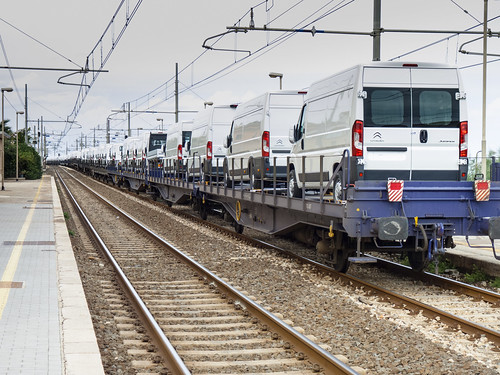
Here’s a picture of new Fiat, Peugeot and Citroën white vans being taken north by train from the factory at the Val de Sangro south of Pescara, Italy, for subsequent ridicule by the privileged.

Friday, 21 November 2014

Opium of the People – Post-Modernist

Karl Marx said it was religion. But it isn’t now. Can’t be as most people are not the slightest bit interested in that any more. What it is now, is i m m i g r a t i o n.
Rather like religion in the 19th century, immigration as a topic is fed to the people of the UK to get them agitated and believing they should spend a lot of time concerning their minds over, and it conveniently diverts attention from the real problems, the problems of poverty, disengagement, and personal under-achievement.
Immigration is the new Opium of the People. And like religion in previous times, in reality it isn’t a big issue. Yes of course there are specifics. There are a minority who play the benefits system or get into criminality, that will happen whenever you get a large number of people. There are pressures on schooling and healthcare and social services, yet that should be seen as a positive, it means you have people coming into the area to work, it’s a sign of economic development and prosperity.
So where’s the problem? The problem seems to be with those who feel powerless and forgotten, who see change happening around them as a threat. That is indeed a problem, though not with the change that is happening but with the people who feel forgotten, they should most certainly not be feeling forgotten. And the real problem is with the wealthy and privileged defenders of the status quo, who use the media very powerfully and cleverly to divert people’s attention in order that there should be minimum challenge to their status quo; immigration is a godsend to them.
The people fall for it, or many do. And who can blame them? Even though it is nigh-on impossible to find anyone who has themselves been adversely affected by immigrants – it’s all ‘out there and ruining our country’ – without their being able to identify anything that actually affects them (aside from feeling uncomfortable in the checkout queue in Asda because they cannot understand what the people behind them are saying to each other).
Religion as a people’s diversion from reality gradually faded away. Probably immigration will too, though most likely to be replaced by something else. Not sure what that something else will be yet, maybe it’s currently too far off in the future.

Thursday, 13 November 2014

Body Art of the Great Discoverers

My friend Stuart Morgan wrote me thus:
I was eagerly watching the BBC news coverage of the Rosetta space probe this morning and just about to phone my grandchildren to say, ‘switch off the cartoons and you’ll see the European Space Centre in Darmstadt where Granddad worked in the 60s’, when, to my disbelief and horror, the ‘scientist’ being interviewed suddenly revealed a tattoo on his leg picturing the proposed landing! I put the phone down, sadly realising that their questions would probably not be about meteors and technology but why I hadn’t had a limb similarly defaced! As I email this to you, the outcome of the landing is still unknown so the chap’s leg may have been sacrificed in vain. It set me wondering how the great discoverers of the past might have looked had they also elected to have body art of their, as yet, unproven theories; might be a humorous theme here?
Newton with pears falling? Darwin covered in worms? Fleming with blue cheese? no ‘cos these are the successful ones – need to have the unknown, failed thinkers.

Friday, 17 October 2014

Immigrants’ Protest in Sardinia

Twenty seven immigrants of Asian and North African origin, staying at an agriturismo turned reception centre in Tonara, Sardinia, have staged a protest outside the main police station (the Questura, which as well as being a police headquarters will also house the immigration offices) in Nuoro, the regional capital, saying that at Tonara they are being treated like animals.
Tonara really is very remote, right in the middle of Sardinia, it is in the mountains 64 kilometers from Nuoro. Presumably the migrants were taken to Tonara, as they are being taken to places all over Italy, for their asylum applications to be processed. The agriturismo has been let, in effect, to Social Services.
‘We have already checked the house’, emphasises the acting vice prefect ‘We have spoken with the manager of the agriturismo and ourselves verified the conditions. The migrants all have refugee status: hot meals, clean beds, mobile phones, personal clothing and Skype (symbolic of the priorities of an Italian, even in central Sardinia!). ‘This protest surprises us . . . no one has complained before now, we suspect there are other motives, the case will be looked into further.’
Hardly surprising that the migrants are getting a bit frustrated, way out there in Tonara, and this is surely not going to be the first and only of these sorts of event, for the centres really are springing up everywhere, see also Rural Reception.
The article concerning the protest (in Italian) in La Nuova Sardegna, Nuoro edition.

Yesterday trenches and bayonets, today you expect an iPhone

‘Y esterday trenches and bayonets, today you expect an iPhone’, the slogan of a neo-nazi group in Rome, the subtlety of which is beyond me, anyway they chucked flour and eggs at a queue of people at the Apple store, who were waiting to get a first go at an iPhone6. I missed this story when it happened as, as it happens, I was in Zurich marvelling at the height, muscles, zoot suits and shiny shoes of the bouncers at the Apple store, controlling those queueing to get a first look at the iPhone6.
The shopping centre at the Porta di Roma seems to have been laxer on security than the Swiss – somewhat surprisingly, given the opportunity to wear a menacing suit and snarl.

Wednesday, 20 August 2014

Skate à la Jackson Pollock

I got a promotional email, containing this photo: It may be called ‘Skate à la Jackson Pollock’ (or possibly Pollock à la Jackson Skate), whatever it is, seems the restaurant has Michelin stars.
Bleaagh! It’s just the sort of food in restaurants that I don’t like. To mucked-about with. KISS. Keep It Simple, Stupid. It’s a joke, surely, with all those colourful substances squeezed on top. What must it taste like? The restaurant has Michelin stars.